New Article on the History of Datafication in Education

Datafication is often portrayed as a revolutionary development within and beyond educational governance. It is believed to usher in novel modes of governance, foster new relationships between private and public entities, and introduce innovative data technologies along with new forms of research and scholarship.

Amid the prevailing focus on what’s new , Antti Saari examines the ghosts of data futures past. He delves into the historical continuities of datafication in education, shedding light on the overlooked aspects of past data revolutions and their varying success in driving substantial changes within the field of education.

You can access the article here (open access)

Examining the psychologization of student subjectivity in Finnish universities

In a recent article in Sociological Research Online Antti Saari, together with Kristiina Brunila and Saara Vainio (University of Helsinki) analyze the assemblages involved in constructing the university student as a mentally vulnerable individual.

Abstract: Public debate and media attention concerning mental health problems, stress, psycho-emotional vulnerabilities, and anxiety among university students has reached record level. Informed by media representations, student mental health guides, and our observations, we focus on the ethos of vulnerability as an articulation of psychologized student subjectivity in Finnish academia. We explore the multiple registers in which the ethos of vulnerability tends to operate as an assemblage to depict and govern student subjects.

You can access the OA article The Psychologization of Student Subjectivity in the Finnish Academia here.

New Article: Proustian lessons on self-cultivation

In a recently published article in Philosophical Inquiry in Education, Antti Saari and Jan Varpanen discuss the cultivation of desire from a psychoanalytic point of view.

Abstract: Taking Marcel Proust’s In Search of Lost Time (À la recherche du temps perdu) as a literary vehicle, this article uses a psychoanalytic lens to examine the problem of what to do with our desires in the philosophy of education. The article describes an apprenticeship, a personal process of learning in which an ethical rapport with desire can be established. Apprenticeship entails a temporal relationship called “afterwardsness” (Nachträglichkeit), in which the subject constructs the truth of its desires in hindsight. This result can only be achieved by first failing to see the possibility of attaining the object of desire and then eventually coming to understand the nature of desire in general. While others have framed the relationship between desire and education in terms of either fulfilling one’s desires or questioning their desirability, we argue that a more lasting ethical attunement to desire can be found via an apprenticeship in failure.

You can read the article (open access) here.

New article on Future Classroom Labs out in Journal of Education Policy

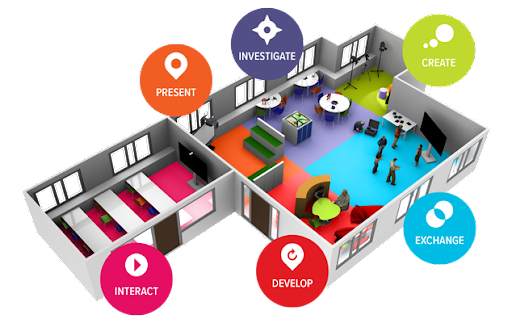
How do new classroom designs travel and transform across Europe?  Antti Saari and Mathias Decuypere look at how Future Classroom Lab, a novel classroom concept created and hosted by European Schoolnet, operates as a prototype and proto-practice.  

Abstract: The study of topological policy cultures highlights a tendency in policy spaces to undo the effects of topographical and cultural distances and differences. In contemporary education policy trends, such traits are present in the attempts to reimagine classroom spaces. A case in point is Future Classroom Lab (FCL), a physical classroom concept developed and spread across Europe, which promotes the use of digital technologies and divides the classroom into different functional ‘zones’. We analyse FCL as a prototype that incites open exploration in the use and design of classrooms. We argue that prototypes are sometimes equally morphing into proto-practices, which are practised forms of prototypes that are in constant flux, enabling new and different functions, meanings and emotions to emerge. Prototypes and proto-practices secure the continuous transformation of policy spaces through relatively open variation, differentiation and exploration. As such, they are emblematic of contemporary topological policy cultures.

The article (Open Access) can be found here.

Image: European Schoolnet

Two Volumes in the Flashpoint Epistemology Series

Contemporary platitudes regarding interconnectedness abound. From connectography to the network society, from appeals to forces such as qi, prana and power to ‘stress contagion’ between teachers and students, from the legacies of colonialism to artificial intelligence, we are encouraged to understand ourselves as embedded, interconnected, in circuits, matrices, systems and fields.

The role of technology in mediating and producing such new sensibilities, potentials, and issues, and in cutting off other possibilities, is integral to today’s versions of interconnection. Debates over interconnection, however, can slide over the flashpoints that emerge, reshape, and reformulate issues across geopolitical regions, cosmologies, timespaces, species, institutions and more. This series considers these flashpoints – moments of seeming irresolvabiity generated within cross-philosophical clashes, connections, contacts and negotiations – as urgent sites of study in the Now and for rethinking educational futures.

The Flashpoint series is dedicated to analysing flashpoints within educational settings that are mediated by or involve technological inventions.

Volume 1: Arts and Humanities-Based Rethinkings of Interconnection, Technologies, and Education examines contemporary collisions and reworkings of cultural-political issues in education through arts and humanities-based approaches. How and whether lines are (re)drawn in educational practice – and via who-what – between justice, morality, religion, ethics, subjectivities, intersectionality, the sublime, and the senses are a particular focus. The volume offers innovative relational approaches and new narrativization strategies, examining the aporia experienced when operating in educational domains of inevitable, recurring, difficult, fortuitous, and/or unforeseen flashpoints. 

The chapters will engage researchers seeking new approaches to education’s complexities, nested discourses, and ever-moving horizons of enactment. It will also benefit post/graduate students and teachers whose work intersects with sociological, philosophical, and cultural studies and who are curious about claims to interconnection, the ethical quandaries embedded in practice, and the affordances and limits of technological innovation.

Volume 2: Aporias of Complexity in Power, Politics and Methods in Education brings creative sociopolitical research perspectives to flashpoints that emerge amid appeals to globalization, synoptic policy approaches, and new technologies – however defined. The chapters challenge prevailing notions of distance and difference, comparative philosophy, worlding practices, and contact zones. In the remaking of subjects, the unhoming of geopolitics, and new approaches to relationality, youth, and classrooms, complexities in preserving and questioning identity are laid bare and renovated. How technologies challenge and redefine racialization, engendering, and inter/nationalization are examined amid the reworking of oppression, success, well-being, politics, method, and power.

The volume will be beneficial for researchers seeking new approaches to education’s complexities, nested discourses, and ever-moving horizons of enactment. It is also a key text for post/graduate students and teachers interested in technological impact, globality, policymaking, and new ways of conducting research in contexts of digitalization and social media.