The Palgrave Handbook of Science and Technology Studies in Education

A major new handbook is set to contribute significantly to research at the intersection of education and Science and Technology Studies (STS): The Palgrave Handbook of Science and Technology Studies in Education.

Bringing together an international team of editors and contributors, the volume addresses an increasingly important area of scholarship. It focuses on the dynamic interplay between science, technology, and educational practices, offering a comprehensive overview of current developments in this emerging field. The handbook assembles diverse strands of research that connect STS perspectives with education, providing the first extensive state-of-the-art reference for this subfield.

A key strength of the volume lies in its combination of theoretical and empirical work. The chapters draw on a range of perspectives and methodologies, reflecting the interdisciplinary nature of both STS and educational research. This combination allows the book not only to map current debates but also to highlight new directions and future challenges for researchers. 

The handbook isa central reference point for scholars interested in how technologies, infrastructures, and scientific practices shape—and are shaped by—education. In doing so, it provides a platform for advancing dialogue between disciplines that are often treated separately, but which increasingly intersect in contemporary research and policy discussions. 

Further details about the volume can be found here.

Antti Saari’s Inaugural Lecture

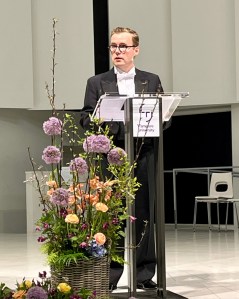
Professor Antti Saari delivered his inaugural lecture at Tampere University on May 11th, offering a wide-ranging reflection on the role of educational science in shaping how schooling is understood, governed, and transformed. Drawing on historical examples and his own research, he examined how educational expertise has long promised to make learning and teaching more precise, effective, and responsive to societal needs, while also raising critical questions about the assumptions underlying these ambitions.

Saari began by revisiting early twentieth‑century visions of education, which framed empirical research as a means to fully understand learners and optimise teaching accordingly. He showed how this aspiration has persisted, fuelling efforts to align education with societal demands through clearly defined objectives, methods, and evaluation techniques. At the same time, his lecture emphasised that educational knowledge is deeply entangled with power: concepts, theories, and modes of reasoning do not simply describe education but actively shape policies, institutional practices, and everyday school life. From statistical methods in assessment to the design of learning environments, educational expertise influences how education is organised while also narrowing and enabling particular possibilities.

In closing, Saari called for a more critically informed approach to educational development. He challenged the widely accepted idea that schools must always “keep up with the times,” arguing that such future‑oriented thinking often neglects historical insight and leads to recurring mistakes. Rather than offering quick solutions, he positioned educational research as a field that should interrogate its own assumptions, surface overlooked alternatives, and situate change within longer historical trajectories. In doing so, education can be understood not only as a tool for the future, but as a historically grounded and evolving social practice in its own right.

You can watch the lecture here (available until May 25th).

Can Wisdom Be Taught? Open Seminar in Jyväskylä

On August 28th , from 9.00 to 12.00, the Wisdom Café seminar at Jyväskylä University will invite scholars and the public to engage in a thought-provoking discussion around the question: Can wisdom be taught? Organized in collaboration with Finnish Institute for Educational Research, JYU.Wisdom and POISED research group from Tampere University, the event will bring together experts from a wide range of disciplines to explore how different fields understand and approach the concept of wisdom.

The seminar aims to foster interdisciplinary dialogue and public engagement, encouraging participants to reflect on the role of education, ethics, and human development in cultivating wisdom. By bridging academic perspectives and societal concerns, the event exemplifies the kind of collaborative inquiry needed to address complex questions that resonate across both scholarly and everyday contexts.

Click here for free registration and more information (in Finnish):

The Hidden Histories of the “Attention Crisis” in Education

In an era of digital distractions and AI-driven media, strategies to reclaim focus—like meditation, unplugging, and reconnecting with nature—are widely promoted. But what if our understanding of attention is shaped by deeper historical forces?

A new open-access article in Educational Theory by Antti Saari and Bernadette Baker explores the long-standing connections between attention, spirituality, and education. The authors trace contemporary concerns about the “attention crisis” back to European Christian monastic traditions, where disciplining attention was tied to both personal transformation and practices of Othering.

Their research uncovers how medieval vigilance and soul-governing techniques became embedded in Christian empire-building, influencing modern educational approaches to focus and distraction. By examining these historical trajectories, the authors reveal how today’s discussions on attention remain entangled with spiritual binaries and exclusionary logics.

Read the full article here.