New Article: Proustian lessons on self-cultivation

In a recently published article in Philosophical Inquiry in Education, Antti Saari and Jan Varpanen discuss the cultivation of desire from a psychoanalytic point of view.

Abstract: Taking Marcel Proust’s In Search of Lost Time (À la recherche du temps perdu) as a literary vehicle, this article uses a psychoanalytic lens to examine the problem of what to do with our desires in the philosophy of education. The article describes an apprenticeship, a personal process of learning in which an ethical rapport with desire can be established. Apprenticeship entails a temporal relationship called “afterwardsness” (Nachträglichkeit), in which the subject constructs the truth of its desires in hindsight. This result can only be achieved by first failing to see the possibility of attaining the object of desire and then eventually coming to understand the nature of desire in general. While others have framed the relationship between desire and education in terms of either fulfilling one’s desires or questioning their desirability, we argue that a more lasting ethical attunement to desire can be found via an apprenticeship in failure.

You can read the article (open access) here.
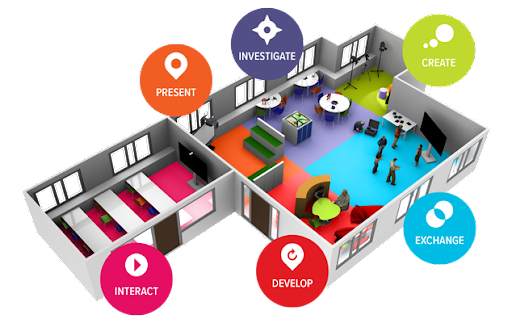
New article on Future Classroom Labs out in Journal of Education Policy

How do new classroom designs travel and transform across Europe?  Antti Saari and Mathias Decuypere look at how Future Classroom Lab, a novel classroom concept created and hosted by European Schoolnet, operates as a prototype and proto-practice.  

Abstract: The study of topological policy cultures highlights a tendency in policy spaces to undo the effects of topographical and cultural distances and differences. In contemporary education policy trends, such traits are present in the attempts to reimagine classroom spaces. A case in point is Future Classroom Lab (FCL), a physical classroom concept developed and spread across Europe, which promotes the use of digital technologies and divides the classroom into different functional ‘zones’. We analyse FCL as a prototype that incites open exploration in the use and design of classrooms. We argue that prototypes are sometimes equally morphing into proto-practices, which are practised forms of prototypes that are in constant flux, enabling new and different functions, meanings and emotions to emerge. Prototypes and proto-practices secure the continuous transformation of policy spaces through relatively open variation, differentiation and exploration. As such, they are emblematic of contemporary topological policy cultures.

The article (Open Access) can be found here.

Image: European Schoolnet

Uutuuskirjan esimerkkitarinat rohkaisevat kestävyysmurrokseen

KESTO-hankkeen tutkijat lähestyivät aktivisteja, taiteilijoita ja yritysjohtajia kysymyksillä kestävästä elämästä.

Rohkaisevia kestävämmän elämäntavan esimerkkitarinoita esittelevä teos on syntynyt osana opetus- ja kulttuuriministeriön rahoittamaa hanketta ja sen toivotaan saavuttavan mahdollisimman monen lukijan, niin yritysjohtajan kuin opiskelijankin. Kirja on vapaasti ladattavissa osoitteesta: https://erepo.uef.fi/handle/123456789/29756

POISEDista kirjassa on mukana Antti Saari, Jani Pulkki ja Veli-Matti Värri, jotka kirjoittavat hyveistä ekokriisien aikakaudella, sekä Katri Jurvakainen, joka haastattelee aktivisti Anton Keskistä.

Ks. tiedote.(UEF.fi)

ENACT gets going!

The EnAct project officially kicked off with a seminar on September 18th 2020. Due to the pandemic situation, the originally planned two-day event at Tampere University was replaced by a virtual seminar. Fifteen researchers from Finland, Sweden and the United States convened to discuss the theoretical and methodological questions of environmental activism as self-cultivation.

Read more here.