Tuuli From Awarded Academy Research Fellowship for Research on School Architecture and Governance

POISED congratulates Tuuli From, postdoctoral researcher on being awarded a four-year Academy Research Fellowship by the Research Council of Finland for her project Built language policy: Architecture, biopolitics and disciplinary power in co-located Finnish- and Swedish-language schools in Finland (POLYCO),

The project examines policy discourses, planning processes, and everyday spatial practices in co-located Finnish- and Swedish-language schools in bilingual Finland. The aim is to increase understanding of the (dis)connections and between language and education policies, school architecture, and spatial practices. Finnish comprehensive education in the national languages is organized separately for both language groups, typically in their own buildings. However, co-locating Finnish- and Swedish-language schools in modern school centers has resulted in a paradigm shift in national language policy. By analyzing policy and planning documents, interviews with municipal administration, and ethnographic data of the planning processes and everyday practices at schools, this project provides insight into how educational governance travels through architecture to achieve language policy goals. The results will inform the planning and building of linguistically sustainable schools.

The fellowship provides four years of funding and further strengthens POISED’s critical research on school spaces.

The Palgrave Handbook of Science and Technology Studies in Education

A major new handbook is set to contribute significantly to research at the intersection of education and Science and Technology Studies (STS): The Palgrave Handbook of Science and Technology Studies in Education.

Bringing together an international team of editors and contributors, the volume addresses an increasingly important area of scholarship. It focuses on the dynamic interplay between science, technology, and educational practices, offering a comprehensive overview of current developments in this emerging field. The handbook assembles diverse strands of research that connect STS perspectives with education, providing the first extensive state-of-the-art reference for this subfield.

A key strength of the volume lies in its combination of theoretical and empirical work. The chapters draw on a range of perspectives and methodologies, reflecting the interdisciplinary nature of both STS and educational research. This combination allows the book not only to map current debates but also to highlight new directions and future challenges for researchers. 

The handbook isa central reference point for scholars interested in how technologies, infrastructures, and scientific practices shape—and are shaped by—education. In doing so, it provides a platform for advancing dialogue between disciplines that are often treated separately, but which increasingly intersect in contemporary research and policy discussions. 

Further details about the volume can be found here.

Antti Saari’s Inaugural Lecture

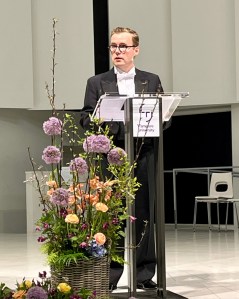
Professor Antti Saari delivered his inaugural lecture at Tampere University on May 11th, offering a wide-ranging reflection on the role of educational science in shaping how schooling is understood, governed, and transformed. Drawing on historical examples and his own research, he examined how educational expertise has long promised to make learning and teaching more precise, effective, and responsive to societal needs, while also raising critical questions about the assumptions underlying these ambitions.

Saari began by revisiting early twentieth‑century visions of education, which framed empirical research as a means to fully understand learners and optimise teaching accordingly. He showed how this aspiration has persisted, fuelling efforts to align education with societal demands through clearly defined objectives, methods, and evaluation techniques. At the same time, his lecture emphasised that educational knowledge is deeply entangled with power: concepts, theories, and modes of reasoning do not simply describe education but actively shape policies, institutional practices, and everyday school life. From statistical methods in assessment to the design of learning environments, educational expertise influences how education is organised while also narrowing and enabling particular possibilities.

In closing, Saari called for a more critically informed approach to educational development. He challenged the widely accepted idea that schools must always “keep up with the times,” arguing that such future‑oriented thinking often neglects historical insight and leads to recurring mistakes. Rather than offering quick solutions, he positioned educational research as a field that should interrogate its own assumptions, surface overlooked alternatives, and situate change within longer historical trajectories. In doing so, education can be understood not only as a tool for the future, but as a historically grounded and evolving social practice in its own right.

You can watch the lecture here (available until May 25th).

POISED researchers receive funding from KONE foundation

Good news for POISED! KONE foundation published its funding decisions in December 2025. Antti Saari received funding for  a three year project examining subtle traces of the past in new school spaces.

Moreover, POISED researcher Jan Varpanen received funding as a post-doctoral reseacher in the project Microbial Childhood: Restor(y)ing Daycare Ecologies II led by Professor Zsuzsa Millei.

Read more about KONE funding decisions here.