In educational policy visions, it is customary to present Finnish school system as outdated and alienated from the surrounding society. Despite success in PISA, schools are allegedly the last bastion of resistance to the global changes in work and learning in the 21st century.
School architecture and new learning environments
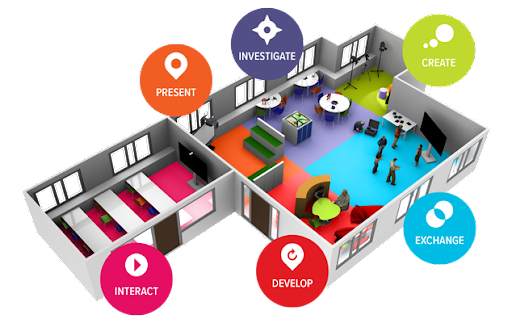
In a new study, POISED researcher Antti Saari analyses recent policy visions in new school architecture and learning environments.
There has been a growing tendency – over the last decade or so – to focus on envisioning school architecture and the future of the comprehensive school network.
Finnish schools have been involved in a public debate about public buildings with dangerously poor indoor air, leading to either expensive renovations or building new schools altogether. Finland also has a rapidly ageing population, which – combined with growing urbanisation – means that schools are being closed in rural areas, while new and bigger units are being constructed in metropolitan areas.
In addition, the country’s success in PISA has meant there has been a surge in establishing education export initiatives, not only with regards to pedagogical expertise, but the whole ‘package’ of schools with curricula, technology and well-equipped facilities. All these features have created a bustling market for school architecture and new learning environments, which in turn would explain the high number of policy documents about future learning environments in the last decade.
Saari analyzes how visions of new learning environments operate as political fantasies that promise creativity, pleasure and fulfilment in flexible spaces.
Saari, A. 2021. Topologies of desire: Fantasies and their symptoms in educational policy futures. European Educational Research Journal. Online first version: https://doi.org/10.1177/1474904120988389
Future knowledges
Another recent article traces the Finnish rhetoric of future skills and knowledges in educational policy documents.
Policy actors from ministries to think tanks and lobbyists highlight individuality, creativity and freedom as values widely recognized in the Finnish knowledge society. Yet allegedly this is not the case in schools, which are still organized according to structures of mass production, i.e. the same contents and methods for everyone.
In the allegedly outdated Finnish school system, knowledge is seen as a something that can be amassed and as retaining its value in the future. In the future, however no amount of subject knowledge in, for example, history or geography alone can serve the needs of society. It is rather general skills, mindsets and attunements such as creativity and flexibility that can enable individuals to adapt to different situations.
Janne Säntti, Petteri Hansen and Antti Saari analyze how policy rhetoric highlights play, innovation and improvisation as key principles to be adopted in envisioning future school knowledge and skills.
Säntti, J., Hansen, P. & Saari, A. 2021. Future jamming: Rhetoric of new knowledge in Finnish educational policy texts. Policy Futures in Education. Online first version: https://journals.sagepub.com/doi/10.1177/1478210320985705

 POISED