New Article on the History of Datafication in Education

Datafication is often portrayed as a revolutionary development within and beyond educational governance. It is believed to usher in novel modes of governance, foster new relationships between private and public entities, and introduce innovative data technologies along with new forms of research and scholarship.

Amid the prevailing focus on what’s new , Antti Saari examines the ghosts of data futures past. He delves into the historical continuities of datafication in education, shedding light on the overlooked aspects of past data revolutions and their varying success in driving substantial changes within the field of education.

You can access the article here (open access)
Examining the psychologization of student subjectivity in Finnish universities

In a recent article in Sociological Research Online Antti Saari, together with Kristiina Brunila and Saara Vainio (University of Helsinki) analyze the assemblages involved in constructing the university student as a mentally vulnerable individual.

Abstract: Public debate and media attention concerning mental health problems, stress, psycho-emotional vulnerabilities, and anxiety among university students has reached record level. Informed by media representations, student mental health guides, and our observations, we focus on the ethos of vulnerability as an articulation of psychologized student subjectivity in Finnish academia. We explore the multiple registers in which the ethos of vulnerability tends to operate as an assemblage to depict and govern student subjects.

You can access the OA article The Psychologization of Student Subjectivity in the Finnish Academia here.

New article on Future Classroom Labs out in Journal of Education Policy

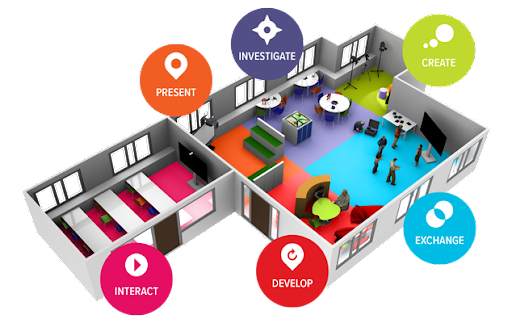
How do new classroom designs travel and transform across Europe?  Antti Saari and Mathias Decuypere look at how Future Classroom Lab, a novel classroom concept created and hosted by European Schoolnet, operates as a prototype and proto-practice.  

Abstract: The study of topological policy cultures highlights a tendency in policy spaces to undo the effects of topographical and cultural distances and differences. In contemporary education policy trends, such traits are present in the attempts to reimagine classroom spaces. A case in point is Future Classroom Lab (FCL), a physical classroom concept developed and spread across Europe, which promotes the use of digital technologies and divides the classroom into different functional ‘zones’. We analyse FCL as a prototype that incites open exploration in the use and design of classrooms. We argue that prototypes are sometimes equally morphing into proto-practices, which are practised forms of prototypes that are in constant flux, enabling new and different functions, meanings and emotions to emerge. Prototypes and proto-practices secure the continuous transformation of policy spaces through relatively open variation, differentiation and exploration. As such, they are emblematic of contemporary topological policy cultures.

The article (Open Access) can be found here.

Image: European Schoolnet